
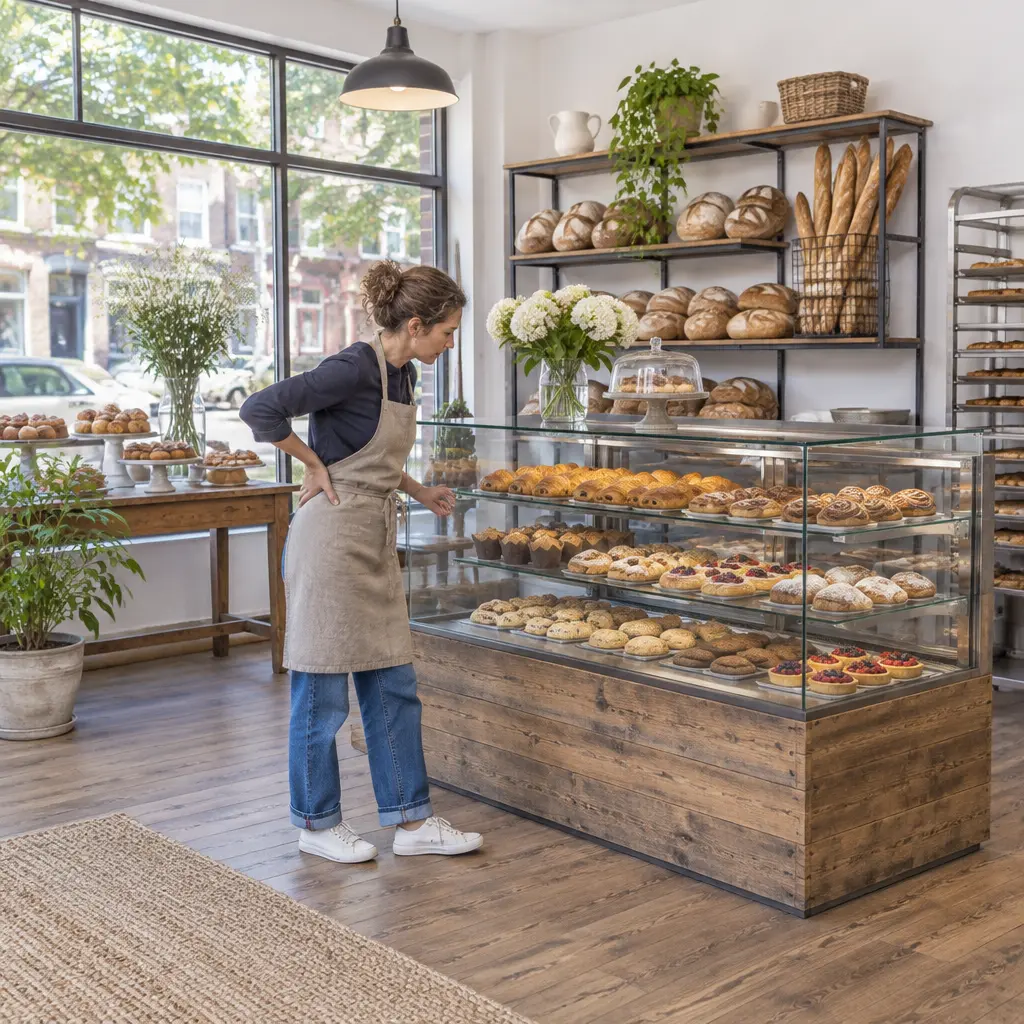
Customer loyalty is the ongoing preference customers show for a business, expressed through repeat visits, recommendations, and willingness to choose it over alternatives. For a small food business, building that loyalty means reliably delivering good food and service, making the experience easy and personal, and giving customers reasons to return. The National Restaurant Association reported that 2024 U.S. restaurant-industry sales were projected to reach $1.1 trillion, while operators continued to face pressure from costs and competition. In that environment, loyalty can support steadier demand. This guide covers the foundations of loyalty, practical ways to earn repeat business, useful measures, and an actionable plan.
Customer Loyalty Depends on Consistent Value
Customer loyalty is a relationship, not simply a transaction or a points balance. In marketing, loyalty is commonly understood as a customer’s continuing preference for a brand, reflected in repeat purchasing and positive attitudes. For a food business, that preference is earned when customers believe the quality, convenience, hospitality, and price are worth choosing again.
Loyalty has several connected forms: behavioral loyalty, such as repeat orders; attitudinal loyalty, such as trust and preference; and advocacy, such as recommending the business to friends. These forms can reinforce one another, but they are not identical. A frequent customer may be responding to convenience rather than strong attachment, while an enthusiastic advocate may visit less often because of distance or budget.
The U.S. Bureau of Labor Statistics’ Consumer Expenditure Surveys track household spending on food at home and away from home, illustrating how food purchases compete within household budgets. A small operator cannot control customers’ available spending, but can make the value of each visit clear through dependable portions, transparent pricing, and a memorable experience.
Product reliability builds trust
Reliability means customers receive the expected taste, freshness, portion, and presentation each time. Standardized recipes, documented preparation steps, and regular checks help reduce variation between shifts. When an item is unavailable or a delay occurs, clear communication protects trust better than leaving customers to discover the problem at pickup.
Hospitality turns service into a relationship
Hospitality is the way a business makes customers feel welcomed, respected, and helped. Remembering a regular’s usual order can make an interaction personal, but staff should avoid assuming preferences or collecting unnecessary personal information. A friendly greeting, accurate order confirmation, and thoughtful recovery when something goes wrong can matter as much as a formal rewards program.
Convenience protects the customer’s time
Convenience includes accurate opening hours, easy-to-read menus, straightforward ordering, reliable pickup, and clear information about ingredients and allergens. For a small café, bakery, food truck, or takeaway counter, reducing friction can be a meaningful advantage even without a large technology budget.
Customer Retention Improves Through Thoughtful Experiences
Retention is the ability to keep customers returning over time. It grows from the everyday experience, so loyalty tactics work best when they strengthen rather than distract from the core offer. The following approaches can be adapted to the size, service style, and margins of a small food business.
Design a focused loyalty reward
A loyalty program gives customers a clear benefit for repeat business. Common formats include a stamp card, points, a visit-based reward, or a prepaid membership. Keep the rule simple, explain when rewards can be used, and choose a benefit that fits the business’s margins—for example, a complimentary drink after a defined number of purchases rather than a large discount on every order.
The National Restaurant Association’s 2024 research on restaurant technology and consumer preferences discusses the role of digital tools and loyalty offerings in restaurant experiences. A small business can begin with a paper card or a simple point-of-sale feature, then review whether customers understand and use it before investing in a more complex platform. Track repeat visits and reward costs, not just program sign-ups.
Personalize communication with permission
Personalization means making communication relevant to a customer’s interests and visit history without making it intrusive. A bakery might tell subscribers when a seasonal pastry returns; a lunch counter might share a weekly menu. Ask customers to opt in, state what messages they will receive, and make unsubscribing easy. Avoid collecting information that is not needed to provide the service.
Create reasons to visit beyond discounts
Events and limited offerings can strengthen community connection while introducing customers to the menu. Examples include a tasting of a new product, a local-producer feature, a holiday preorder, or a collaboration with a nearby business. These activities should be operationally manageable and consistent with the brand; frequent discounting can train customers to wait for lower prices and may weaken already-tight margins.
Respond well when service fails
Service recovery is the process of acknowledging a mistake, correcting it, and learning from it. Listen without arguing, apologize plainly, offer a proportionate remedy, and record recurring issues. If several customers report long waits or incorrect orders, the durable solution is to improve the process, not merely issue more coupons.
Customer Feedback Guides Improvements and Measurement
Feedback helps a business identify the gap between what it intends to deliver and what customers actually experience. Pair direct comments with operating data: comments explain why customers react, while transaction patterns can show when and how often the behavior occurs.
Gather feedback through low-friction channels
Ask one specific question at a time, such as what customers would change about pickup or which menu item they want to see again. Feedback can be collected in person, on a receipt, through an opt-in email, or in a short online survey. Thank customers and, where practical, explain what changed as a result. Do not treat a small, self-selected survey as representative of every customer.
Track repeat visits and customer value
Useful measures include repeat-purchase rate, visit frequency, average transaction value, redemption rate, and the share of sales from returning customers. Define each metric consistently and compare it over similar periods, accounting for seasonality, holidays, and changes in opening hours. A simple monthly spreadsheet can be enough for a small operator.
For example, a café could compare the number of customers who return within 30 days before and after introducing a breakfast bundle. If repeat visits rise but average order value falls sharply, the promotion may be attracting visits without improving overall contribution. Results should guide experiments rather than be treated as proof of cause on their own.
Use reviews as both evidence and conversation
Online reviews can reveal recurring strengths and service problems, but they represent the people who chose to post, not necessarily the whole customer base. Reply professionally, protect customer privacy, and take recurring issues into staff discussions. Never post a customer’s order history or personal details in a public response.
Customer Loyalty Requires Consistent Food Safety and Clear Information
Food safety is foundational to trust: customers cannot remain loyal to a business they do not consider safe. The U.S. Food and Drug Administration’s Food Code provides a model for retail food safety practices, including temperature control, hygiene, and prevention of contamination. Local and state rules govern compliance, so operators should follow the requirements of their health department and train staff accordingly.
Make safety part of the customer experience
Use documented cleaning and temperature checks, safe food-handling procedures, and clear escalation steps when an issue arises. Staff should know how to answer ingredient and allergen questions accurately and when to verify information rather than guess. Customers may not see every safety measure, but visible cleanliness and confident, truthful answers help establish credibility.
Be transparent about menu and ordering details
Clear descriptions, prices, portion expectations, substitutions, and pickup instructions reduce unpleasant surprises. If an ingredient or preparation method changes, update the menu and tell customers where relevant. Transparency supports informed choices and helps prevent avoidable complaints.
A Practical Plan Turns Loyalty Into Daily Practice
A small food business can build loyalty incrementally rather than launching a costly campaign. Start with the customer experience it can deliver consistently, then test a limited improvement and measure the result.
- Identify the customers and occasions the business serves best, such as weekday lunches, family takeout, or specialty coffee.
- Choose one experience problem to address, using staff observations, reviews, and customer feedback.
- Set a simple baseline, such as repeat visits, order accuracy, or average wait time.
- Test one change for a defined period—for example, a clearer pickup process or a modest visit-based reward.
- Review costs and results, ask customers what they noticed, and keep, adjust, or stop the change.
A neighborhood bakery, for instance, might find that customers value reliable preorder pickup more than a broad discount. By setting a pickup shelf, labeling orders clearly, and notifying customers when orders are ready, the bakery can improve convenience while preserving product margins. The example illustrates a general principle: loyalty often comes from solving a real customer problem repeatedly.
Conclusion: Customer Loyalty Grows From Trust and Relevance
For a small food business, customer loyalty combines dependable product quality, welcoming service, convenience, thoughtful rewards, useful feedback, and safe, transparent operations. Retention improves when customers have a good reason to return; measurement helps the business learn which efforts are working; and responsible service recovery can protect trust when something goes wrong.
Choose one practical improvement this week, establish a baseline, and review the outcome before expanding it. For further guidance, consult the National Restaurant Association’s industry research, the FDA Food Code, and local health-department requirements. Sustainable loyalty is built through repeated experiences that make customers feel confident choosing the business again.
Sources: National Restaurant Association, 2024 State of the Restaurant Industry Report, https://restaurant.org/research-and-media/research/research-reports/state-of-the-restaurant-industry/; U.S. Bureau of Labor Statistics, Consumer Expenditure Surveys, https://www.bls.gov/cex/; National Restaurant Association, Restaurant Technology Landscape Report, https://restaurant.org/research-and-media/research/; U.S. Food and Drug Administration, Food Code, https://www.fda.gov/food/retail-food-protection/fda-food-code