
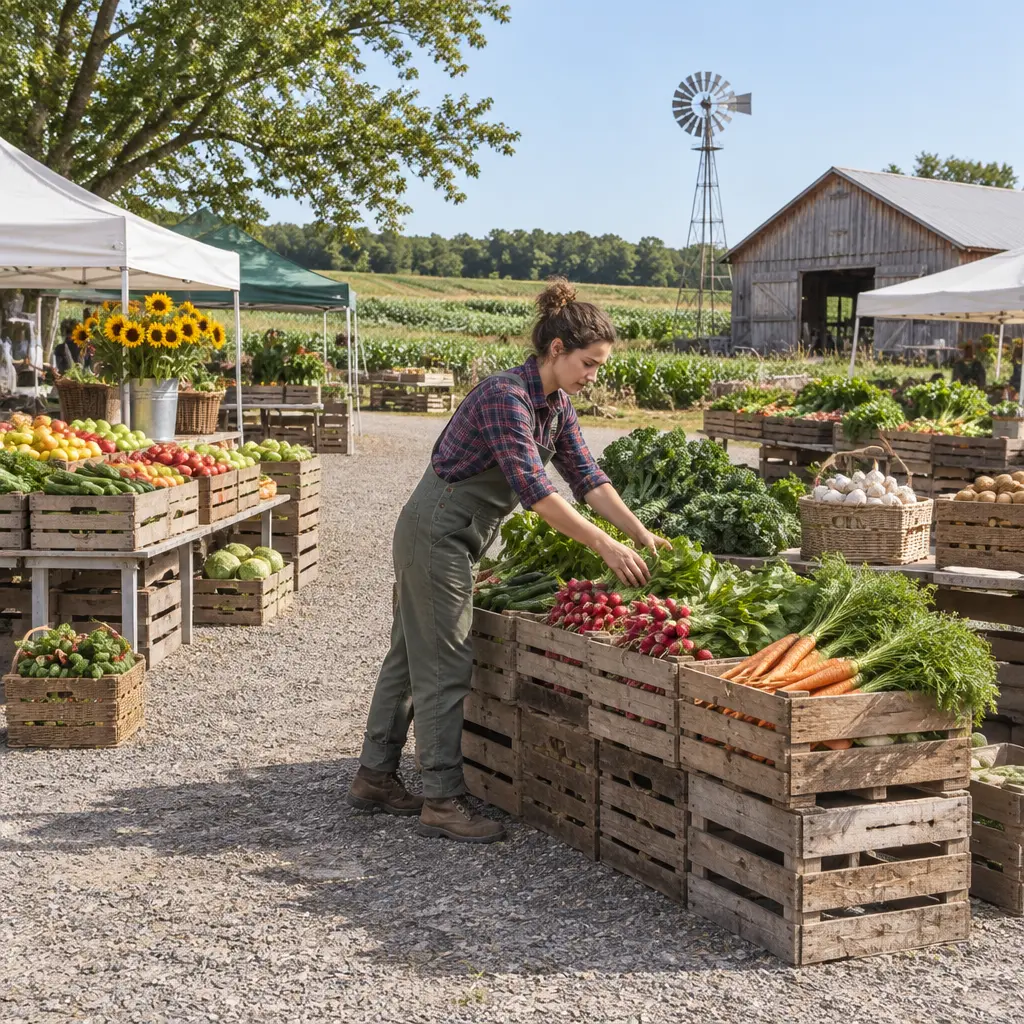
Small local food producers—such as family farms, ranches, fishers, food processors, and community-based businesses—grow, harvest, or make food for nearby markets. Governments can support them by improving access to land and finance, investing in infrastructure, simplifying regulations, strengthening local purchasing, and funding training and climate resilience. The need is substantial: the U.S. Department of Agriculture’s 2022 Census of Agriculture counted about 1.9 million farms, while USDA research has found that small farms face distinct challenges accessing markets and resources. A coordinated approach can help producers stay viable, widen consumer access to regional food, and keep more economic value in local communities.
Governments can support small local food producers through targeted public policy
Public support means policies, services, investments, and purchasing decisions that reduce barriers for smaller producers while serving wider public goals. The Food and Agriculture Organization of the United Nations describes small-scale producers as diverse, often family-based participants in food systems whose access to productive resources and markets can be constrained. Because “small” is defined differently across countries and programs, eligibility rules should reflect local conditions rather than rely on one universal farm-size threshold.
Useful policy categories include direct grants and loans, technical assistance, market development, public procurement, infrastructure, and risk management. These measures work best as a connected package: a producer who receives a loan may still need cold storage, a route to market, and help meeting food-safety requirements. The USDA’s 2022 Census of Agriculture reported approximately 1.9 million U.S. farms, underscoring that policies affecting farm viability reach a large and varied sector.
Affordable finance and grants
Affordable finance includes low-interest loans, small grants, loan guarantees, and flexible repayment terms for equipment, seeds, livestock, processing, or working capital. These tools address a common mismatch: producers often must pay costs months before harvest or sales revenue arrives. USDA Farm Service Agency operating and ownership loans, for example, are designed to help eligible farmers finance farm operations and acquire or improve farmland. Governments can make such programs more accessible by offering application assistance, smaller loan products, and underwriting suited to seasonal cash flow.
Land access and tenure
Land-access policies help new and established producers secure farmland through leases, land trusts, incubator farms, succession planning, or public land programs. Secure tenure matters because producers are less likely to invest in soil health, irrigation, or perennial crops when they may lose access to the land. The USDA National Agricultural Statistics Service reported that the average age of U.S. agricultural producers was 58.1 in 2022, making succession and entry pathways relevant to the sector’s long-term continuity. Governments can support transition planning and connect retiring landholders with beginning farmers.
Technical assistance and business training
Technical assistance provides practical expertise in production, bookkeeping, marketing, food safety, conservation, and business planning. Extension services, community organizations, and producer networks can deliver this support in locally relevant formats. USDA’s National Institute of Food and Agriculture funds Cooperative Extension programs that connect research and education with communities. Tailored assistance is especially valuable for producers navigating new sales channels, recordkeeping rules, or conservation programs for the first time.
Governments can strengthen local food market access
Market access is the ability to sell products reliably and at prices that can sustain production. Small producers may have strong local demand but lack the volume, transport, packaging, or buyer relationships needed to reach it. Public policy can bridge this gap through procurement, market infrastructure, and fair contracting. These interventions connect farm viability with nutrition, local economic development, and the resilience of regional supply chains.
Public procurement from local producers
Public procurement means government agencies buying food for schools, hospitals, correctional facilities, and other public institutions. Local purchasing can provide dependable demand, but contracts should be divided into manageable lots and include realistic delivery schedules so smaller businesses can compete. The USDA Farm to School Census documents school districts’ efforts to purchase local foods and connect students with agriculture. Governments can build on this model by providing vendor registration support, prompt payment, and clear product specifications.
Farmers’ markets, food hubs, and digital sales
Farmers’ markets, food hubs, cooperatives, and online marketplaces aggregate or directly connect local products with buyers. A food hub typically coordinates activities such as aggregation, storage, processing, distribution, and marketing for multiple producers. USDA’s Agricultural Marketing Service has supported regional food systems through programs including the Local Agriculture Market Program. Public investment in shared sales platforms and marketing can reduce the cost of reaching customers, particularly for producers who cannot operate their own retail outlet.
Fair contracts and competition
Fair-market policies help producers understand contract terms, payment timelines, grading standards, and dispute procedures. Governments can encourage transparent agreements and enforce rules against deceptive or unfair practices. The U.S. Department of Justice and USDA have highlighted competition concerns in agricultural markets, where producers may have limited choices of buyers or processors. Supporting cooperatives and shared negotiating capacity can improve producers’ options without requiring each farm to negotiate alone.
Governments can invest in infrastructure and reduce regulatory barriers
Infrastructure and well-designed regulations determine whether producers can safely move food from farms to customers. Rural roads, broadband, irrigation, refrigeration, slaughter and processing capacity, and inspected commercial kitchens can all be critical. At the same time, rules that are confusing or costly to navigate can disproportionately burden small businesses. The aim is not to weaken food-safety protections, but to make compliance clear, proportionate, and achievable.
Cold storage, processing, and transportation
Shared cold rooms, mobile processing units, aggregation facilities, and reliable transport help preserve quality and extend the distance food can travel. These assets are often too expensive for an individual small producer to build and operate. USDA’s Local Food Promotion Program and related regional food initiatives have supported projects that improve local and regional food distribution. Public grants or low-cost loans can prioritize shared-use facilities with transparent access and fees.
Clear, proportionate food-safety rules
Food-safety regulation sets standards for handling, processing, and selling food to protect public health. The U.S. Food and Drug Administration’s Food Safety Modernization Act rules include requirements that vary by activity, scale, and exemptions. Governments can support compliance with plain-language guidance, translation, low-cost training, and technical consultation. Coordinated inspections and realistic compliance timelines can reduce unnecessary duplication while preserving safety outcomes.
Broadband and digital services
Broadband access enables online sales, weather information, digital payments, business records, and remote technical assistance. The Federal Communications Commission has documented persistent gaps in broadband availability, particularly in rural areas. Public investment in connectivity, alongside digital-skills support, can help producers reach customers and use online tools without displacing traditional markets that remain important to their communities.
Governments can improve resilience, sustainability, and risk protection
Resilience policies help producers withstand drought, floods, pests, price volatility, and other shocks while maintaining productive land and water. Climate-smart support may include conservation cost-sharing, diversified cropping, soil-health practices, water efficiency, insurance, and emergency assistance. These measures can protect businesses and strengthen the broader food system, particularly when programs are accessible to farms with limited administrative capacity.
Conservation and climate adaptation
Conservation programs provide financial or technical help for practices that protect soil, water, habitat, and farm productivity. USDA’s Natural Resources Conservation Service offers programs such as the Environmental Quality Incentives Program, which can provide assistance for eligible conservation improvements. Governments can make these programs more useful to small producers by streamlining applications, offering upfront or milestone-based payments, and supporting practices suited to local conditions.
Crop insurance and disaster assistance
Risk-management programs help producers recover when weather, pests, or other covered events cause losses. USDA’s Risk Management Agency administers federal crop insurance, while other USDA programs provide disaster-related assistance under specified conditions. Small and diversified farms may need policies that reflect mixed production, specialty crops, and local-market sales. Outreach through trusted local organizations can help producers understand eligibility and select suitable coverage.
Local food system planning and emergency readiness
Local food planning brings producers, distributors, public agencies, and community organizations together to identify supply-chain gaps and prepare for disruptions. The COVID-19 pandemic exposed vulnerabilities in food distribution, including limited processing capacity and the difficulty of redirecting products when institutional or wholesale markets changed. Governments can use regional food assessments and emergency plans to identify alternate buyers, storage options, and communication channels before a crisis occurs.
Governments can make support more effective through inclusive design and measurement
A program’s impact depends not only on its funding but also on who can access it and how success is measured. Smaller producers may be excluded by complex applications, minimum contract sizes, matching requirements, or limited awareness. Effective policy sets transparent goals, tracks participation, and adapts based on producer feedback and evidence.
Accessible programs for diverse producers
Inclusive program design removes avoidable barriers for beginning farmers, historically underserved communities, Indigenous producers, and businesses with limited staff. The USDA’s 2022 Census of Agriculture collects data on producer demographics and farm characteristics, helping policymakers understand who is participating in agriculture. Governments can offer multilingual application help, accessible meeting formats, small-scale grants, and partnerships with organizations that already serve local producers.
Evaluation using practical indicators
Program evaluation measures whether public support produces meaningful outcomes. Useful indicators include the number and diversity of producers served, sales through local channels, producer retention, processing capacity, payment timeliness, and conservation outcomes. Agencies should report results regularly and compare them with baseline conditions. Public dashboards or annual reports can show whether support is reaching intended businesses and where adjustments are needed.
Conclusion: coordinated public support helps local producers thrive
Governments can support small local food producers by pairing affordable finance and land access with technical assistance, reliable markets, shared infrastructure, workable food-safety guidance, and risk protection. Public procurement and food hubs can connect producers to buyers; conservation and insurance can help protect livelihoods; and inclusive program design can ensure assistance reaches businesses that need it. The broader payoff is a more resilient regional food system and stronger local economies. Policymakers should assess local barriers, consult producers directly, and track results so public investment responds to real needs.
For further action, local governments and community organizations can map existing farms and food businesses, identify missing infrastructure, review public purchasing rules, and convene producers to set measurable priorities. National agencies can complement those efforts with accessible funding, technical assistance, and transparent evaluation.
Sources: U.S. Department of Agriculture, 2022 Census of Agriculture, https://www.nass.usda.gov/Publications/AgCensus/2022/; U.S. Department of Agriculture, 2022 Census of Agriculture: Highlights, https://www.nass.usda.gov/Publications/Highlights/2024/Census22_HL_FarmProducers.pdf; Food and Agriculture Organization of the United Nations, The State of Food and Agriculture 2014: Innovation in Family Farming, https://www.fao.org/3/i4040e/i4040e.pdf; USDA Farm Service Agency, Farm Loan Programs, https://www.fsa.usda.gov/resources/programs/farm-loan-programs; USDA National Institute of Food and Agriculture, Cooperative Extension System, https://www.nifa.usda.gov/about-nifa/how-we-work/extension; USDA Food and Nutrition Service, Farm to School Census, https://www.fns.usda.gov/f2s/farm-school-census; USDA Agricultural Marketing Service, Local Agriculture Market Program, https://www.ams.usda.gov/services/local-regional/lamp; U.S. Department of Justice, Agriculture and Antitrust, https://www.justice.gov/atr/agriculture-and-antitrust; U.S. Food and Drug Administration, FSMA Final Rule for Produce Safety, https://www.fda.gov/food/food-safety-modernization-act-fsma/fsma-final-rule-produce-safety; Federal Communications Commission, 2024 Section 706 Report, https://www.fcc.gov/reports-research/reports/broadband-progress-reports/2024-section-706-report; USDA Natural Resources Conservation Service, Environmental Quality Incentives Program, https://www.nrcs.usda.gov/programs-initiatives/eqip-environmental-quality-incentives; USDA Risk Management Agency, Crop Insurance, https://www.rma.usda.gov/; USDA Economic Research Service, COVID-19 Working Paper: Impacts of COVID-19 on the U.S. Food Supply Chain, https://www.ers.usda.gov/publications/pub-details/?pubid=102766.