
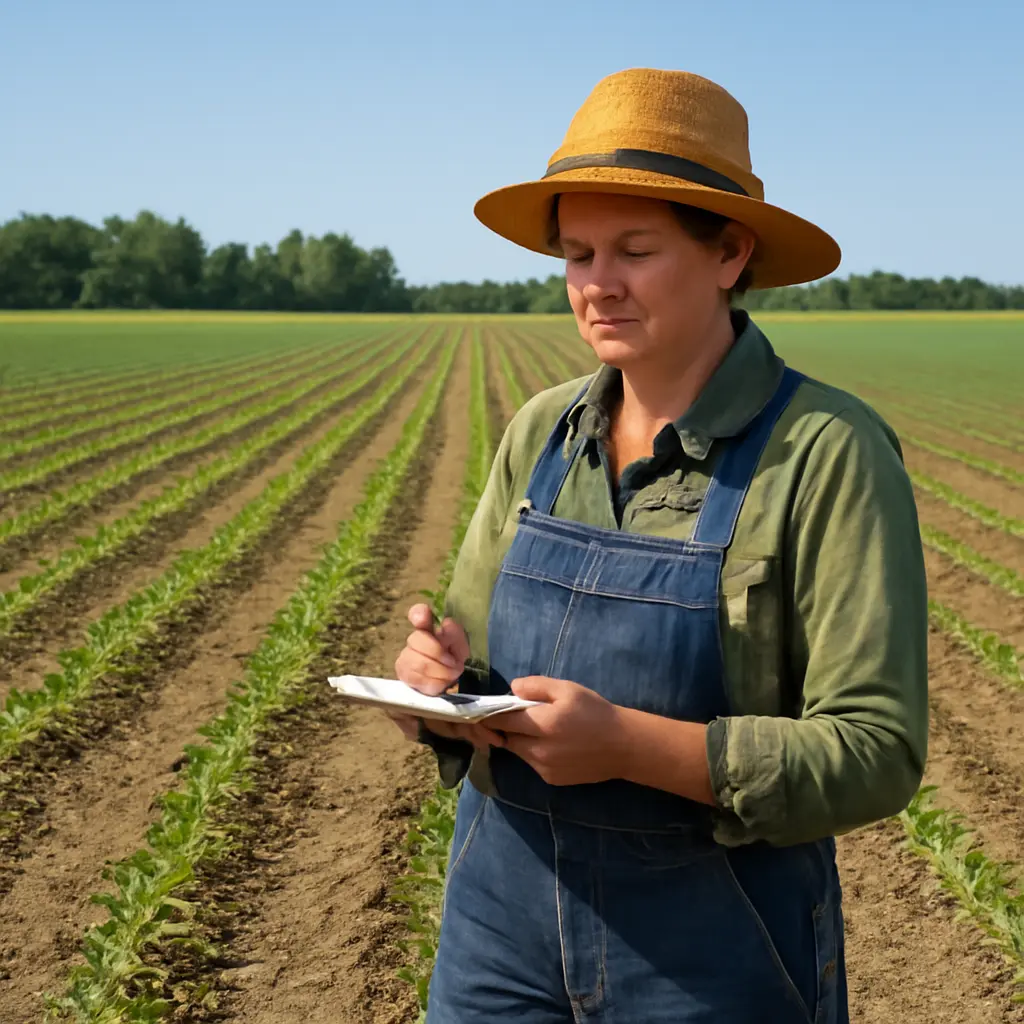
New female farmers can avoid costly setbacks by treating farming as both a production system and a business: start with a realistic plan, understand the land and market, manage cash flow and risk, and seek reliable support. These steps matter in a sector where women are increasingly visible but still face structural barriers. The USDA’s 2022 Census of Agriculture counted 1.2 million female producers—36% of all U.S. producers—and found that women operated 58% of U.S. farms as principal or secondary producers. Yet access to land, capital, equipment, and networks can remain uneven. The most useful fixes are practical: test assumptions before investing, keep records, protect soil and water, price products accurately, and build a trusted advisory network.
Planning mistakes that undermine new female farmers
A farm plan is a working description of what will be produced, for whom, with which resources, and at what cost. The USDA’s National Agricultural Statistics Service (NASS) defines a farm for census purposes as a place that produced and sold, or normally would have sold, at least $1,000 of agricultural products during the census year. That threshold is a statistical definition—not evidence that a farm is financially viable. New farmers should therefore evaluate their own goals, costs, and capacity rather than relying on a label or an appealing idea.
Mistake: starting with a crop or animal before checking demand
Choosing production first and looking for buyers later can leave a farm with perishable goods, weak prices, or no dependable sales channel. Before planting or purchasing livestock, talk with likely customers, compare local prices, and check whether restaurants, farmers’ markets, wholesalers, or community-supported agriculture (CSA) programs actually want the product. A small trial—such as a limited planting or a few market days—can test demand before a large investment.
The USDA’s Agricultural Marketing Service provides market information and resources for direct-to-consumer and local food businesses. Use those tools alongside local conversations; national price data cannot tell you exactly what customers in your area will buy.
Mistake: underestimating startup costs and cash-flow gaps
Startup budgets often omit fencing, irrigation, repairs, packaging, insurance, delivery, permits, and the owner’s labor. Cash flow is the timing of money entering and leaving the business; a farm may be profitable on paper and still run short of cash before harvest or payment arrives. Build a month-by-month budget, separate household and farm expenses, and include a contingency for delays, equipment failure, and lower-than-expected yields.
USDA’s Farm Service Agency (FSA) offers farm ownership and operating loan programs, including options for beginning farmers who meet program requirements. A loan is not a substitute for a sound budget: compare repayment schedules with realistic sales timing, and ask an agricultural lender or Extension adviser to review assumptions before borrowing.
Mistake: buying land or equipment without due diligence
A property’s listing price does not reveal whether its soils, water rights, drainage, access, zoning, or infrastructure fit a particular farm. Before committing, review soil maps, test soil and water where appropriate, confirm legal access and permitted uses, and inspect buildings and machinery with qualified help. Renting, leasing, or sharing equipment can be a lower-risk way to learn what the operation truly needs before purchasing.
The USDA Natural Resources Conservation Service (NRCS) Web Soil Survey can help identify soil characteristics, but it does not replace on-site testing or professional advice. This is especially important for new farmers who may be offered land through informal arrangements: put lease terms, maintenance duties, water access, and renewal conditions in writing.
Production mistakes that reduce resilience and yield
Production management means matching crops or livestock to the farm’s soil, climate, water, labor, and facilities. NRCS describes soil health through interacting physical, chemical, and biological properties that support plant and animal production. In practice, the central lesson is to observe and measure conditions rather than assume that a familiar method will work on a new site.
Mistake: skipping soil tests and basic records
Applying fertilizer or lime without a soil test can waste money, fail to correct a deficiency, or create nutrient imbalances. A soil test provides a baseline for pH and nutrient-management decisions; follow the laboratory’s sampling instructions and use recommendations suited to the crop and region. Keep records of test results, amendments, planting dates, yields, pest pressure, and weather so that future decisions are based on evidence.
The practical fix is a repeatable system: identify management zones, sample them consistently, save results by field and date, and revisit the plan with a Cooperative Extension or NRCS adviser. Records also support applications for conservation programs, loans, and insurance when documentation is required.
Mistake: treating water as unlimited or predictable
Water needs vary by crop, soil, weather, and growth stage, while drought, restrictions, pump failures, or poor water quality can disrupt production. Estimate seasonal demand before planting, verify the reliability and legal status of the water source, and check whether irrigation equipment can deliver water efficiently. Mulching, soil-cover practices, irrigation scheduling, and drought-tolerant varieties may reduce exposure, but the right combination depends on local conditions.
The USDA Climate Hubs provide regional information on climate risks and adaptation strategies. Farmers should use local forecasts and extension guidance as well, because broad climate summaries cannot replace site-specific water planning.
Mistake: reacting to pests without an integrated plan
Integrated pest management (IPM) combines prevention, monitoring, and carefully chosen controls rather than relying on routine spraying. The U.S. Environmental Protection Agency describes IPM as an effective and environmentally sensitive approach that uses information about pest life cycles and their interaction with the environment. New farmers can start by identifying the pest correctly, scouting on a schedule, setting action thresholds where available, and recording what worked.
When pesticides are considered, follow the label, required training, protective-equipment instructions, and applicable state and federal rules. Extension specialists and diagnostic services can help distinguish pests from nutrient, weather, or disease problems—an important distinction before spending money on treatment.
Mistake: overlooking farm safety and physical limits
Farm work involves machinery, animals, chemicals, heat, lifting, and repetitive tasks. The National Institute for Occupational Safety and Health (NIOSH) identifies agriculture as a high-risk industry for work-related injury and illness. A safer operation includes equipment training, guards and rollover protection, safe chemical storage, first-aid supplies, and a plan for emergencies and severe weather.
Safety planning should fit the people doing the work. Adjust tools, work height, protective gear, and task schedules to the worker and job rather than treating discomfort or injury risk as a personal failing. New farmers should also build rest and backup labor into the calendar; fatigue can turn routine tasks into preventable hazards.
Business and market mistakes that make farms harder to sustain
A farm business turns production into dependable income through pricing, sales, records, compliance, and risk management. The USDA’s 2022 Census of Agriculture reported that women made up 36% of U.S. agricultural producers. That participation is substantial, but it does not eliminate the need to plan for access barriers or to make business decisions with clear financial information.
Mistake: pricing products without counting labor and overhead
A price that covers seed or feed but ignores labor, utilities, packaging, transport, spoilage, fees, and equipment depreciation can create a loss on every sale. Calculate the full cost per unit, then compare it with customer expectations and competing products. If the market will not support the necessary price, consider reducing costs, changing the product mix, improving efficiency, or choosing a different sales channel—not simply working more hours for less pay.
Track actual costs after each season and revise estimates. Separate “cash costs,” such as purchased inputs, from the value of unpaid owner labor; both matter when judging whether the enterprise can support the farmer over time.
Mistake: relying on one buyer or sales channel
Depending on a single market can expose a farm to a buyer’s changing demand, a canceled order, or an unexpected price cut. A balanced sales plan might combine direct sales, wholesale accounts, online preorders, or value-added products where regulations and economics allow. Diversification should be deliberate: each channel has its own labor, packaging, delivery, and customer-service costs.
Before expanding, estimate the time required to harvest, pack, deliver, and communicate with customers. A smaller number of profitable, reliable channels is often more sustainable than pursuing every opportunity at once.
Mistake: neglecting bookkeeping, taxes, and legal requirements
Incomplete records make it difficult to understand profitability, prepare taxes, document loan applications, or respond to a dispute. Record income and expenses promptly, keep receipts, reconcile accounts regularly, and store business and personal documents securely. Requirements for food handling, labeling, labor, zoning, water use, and business registration vary by location and product, so confirm rules with the relevant agencies before selling.
The IRS offers guidance on farm income and expenses, while state departments of agriculture and local health departments can clarify product-specific requirements. For complex tax, employment, or land questions, consult a qualified professional rather than relying solely on informal advice.
Mistake: ignoring insurance and disaster risk
Weather events, disease, equipment loss, accidents, and market disruptions can threaten both income and assets. Review available crop, livestock, property, liability, and business-interruption coverage with a knowledgeable agent, and check eligibility and deadlines before a loss occurs. USDA’s Risk Management Agency administers federal crop insurance programs; coverage, availability, and terms differ by crop and location.
Insurance is only one layer of resilience. Maintain emergency contacts, back up financial records, identify alternative suppliers and buyers, and decide in advance how the farm would respond to a failed crop or temporary loss of access to land.
Support and leadership mistakes that isolate new female farmers
A farm’s support network includes technical advisers, peers, lenders, landowners, buyers, and community organizations. The USDA’s 2022 Census counts women as producers when they make decisions about farm operations; its figures underscore that women are already involved in farm leadership at scale. Seeking support is not a sign of inexperience—it is a way to access specialized knowledge and reduce avoidable risk.
Mistake: trying to learn everything alone
Agriculture spans production, finance, regulation, marketing, and land management; no one person can be an expert in every area. Build a small advisory circle that may include Cooperative Extension, NRCS, FSA, an accountant, experienced farmers, and a lender. Ask specific questions, verify recommendations, and compare advice when decisions involve substantial money or safety.
Beginning farmer programs can provide training and connections. The USDA’s Beginning Farmer and Rancher Development Program funds education and technical assistance projects, while regional groups and women-in-agriculture networks can offer peer learning and mentoring. Check current program availability and eligibility with local providers.
Mistake: accepting unclear partnerships or informal agreements
Shared land, labor, equipment, or sales can be useful, but vague expectations often create conflict. Put responsibilities, payment, decision-making authority, ownership of improvements, insurance, and exit terms in writing. For land access, clarify boundaries, water rights, maintenance, renewal, and what happens to crops or infrastructure if the agreement ends.
A written agreement protects all parties and helps distinguish a genuine partnership from an arrangement where one person carries most of the cost or labor. Seek legal review when the commitment is long-term or financially significant.
Mistake: overlooking programs and financing options
New farmers may assume that grants or loans are unavailable, or may apply without checking eligibility, deadlines, and documentation. FSA offers targeted outreach and loan options for beginning farmers and other eligible groups; NRCS conservation programs may help qualifying producers adopt practices that improve natural-resource management. These are not automatic benefits, and program rules change, so confirm current requirements with the local office.
Prepare a concise farm plan, financial records, land documents, and a list of questions before appointments. If an application is denied or delayed, ask what documentation is missing and whether another program, lender, or technical-assistance provider is a better fit.
A practical checklist for avoiding common mistakes
The following sequence turns broad advice into manageable decisions. It can be adapted to a small market garden, livestock operation, or larger diversified farm.
- Talk with prospective buyers and test demand before scaling production.
- Write a farm plan with startup costs, monthly cash flow, labor needs, and realistic sales assumptions.
- Check land, soil, water, access, zoning, and lease terms before committing.
- Start with manageable acreage or herd size, then expand based on recorded results.
- Use soil tests, field observations, production records, and IPM rather than guesswork.
- Calculate full product costs, including labor, delivery, packaging, and overhead.
- Keep financial and production records current; confirm tax and regulatory duties locally.
- Review safety, insurance, emergency procedures, and climate risks before the season begins.
- Build relationships with Extension, USDA service centers, peer groups, and qualified professionals.
- Revisit the plan after each season and change practices that are not financially or physically sustainable.
Conclusion: building a more sustainable start in farming
The most common mistakes new female farmers make are not unique to women: they include weak market research, incomplete budgets, poor land due diligence, insufficient production records, underpriced products, and inadequate safety or risk planning. But barriers to land, finance, equipment, and professional networks can make these errors more costly for women entering agriculture. USDA data show that women are a major part of U.S. farm decision-making, making practical support and fair access important to the sector’s future.
Start small enough to learn, measure what happens, and seek advice before a high-cost decision. Contact Cooperative Extension, NRCS, or a local USDA Service Center; review beginning-farmer training and risk-management options; and use the checklist to turn a promising idea into a resilient business. The strongest first season is not necessarily the biggest—it is the one that produces useful records, informed decisions, and a sound basis for the next one.
Sources: USDA National Agricultural Statistics Service, 2022 Census of Agriculture, https://www.nass.usda.gov/Publications/AgCensus/2022/; USDA National Agricultural Statistics Service, 2022 Census of Agriculture: Women in Agriculture, https://www.nass.usda.gov/Publications/Highlights/2024/Census22_HL_Women_in_Ag_022624.pdf; USDA Natural Resources Conservation Service, Web Soil Survey, https://websoilsurvey.nrcs.usda.gov/; USDA Natural Resources Conservation Service, Soil Health, https://www.nrcs.usda.gov/conservation-basics/natural-resource-concerns/soil/soil-health; USDA Farm Service Agency, Farm Loan Programs, https://www.fsa.usda.gov/programs-and-services/farm-loan-programs; USDA Agricultural Marketing Service, Local and Regional Food Systems, https://www.ams.usda.gov/services/local-regional; USDA Climate Hubs, https://www.climatehubs.usda.gov/; U.S. Environmental Protection Agency, Introduction to Integrated Pest Management, https://www.epa.gov/safepestcontrol/introduction-integrated-pest-management; National Institute for Occupational Safety and Health, Agriculture, Forestry, and Fishing, https://www.cdc.gov/niosh/agriculture/; USDA Risk Management Agency, https://www.rma.usda.gov/; USDA Beginning Farmer and Rancher Development Program, https://www.nifa.usda.gov/grants/programs/beginning-farmer-rancher-development-program; Internal Revenue Service, Publication 225: Farmer’s Tax Guide, https://www.irs.gov/publications/p225.