
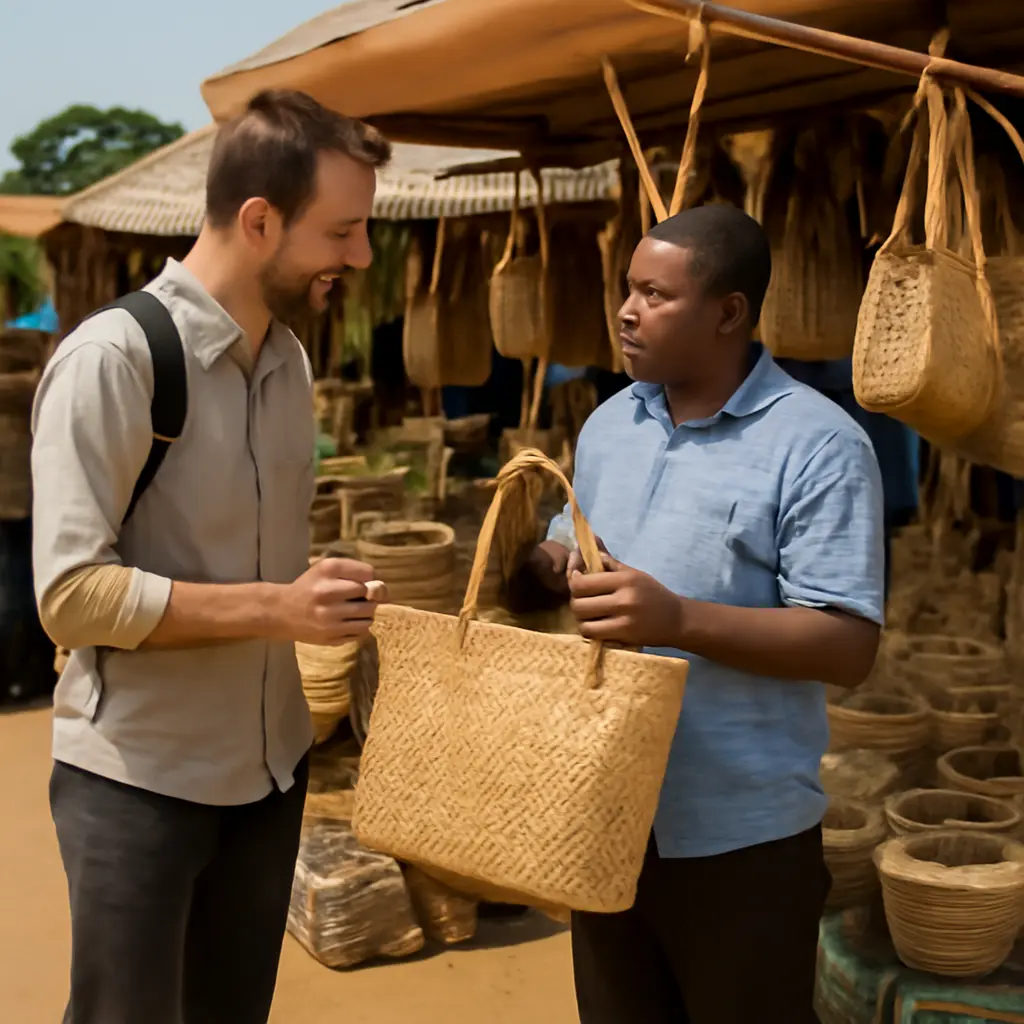
Market-price negotiation is the respectful discussion between a buyer and seller about the price or terms of a purchase, especially where prices are flexible rather than posted as fixed. Seasoned travelers treat bargaining as a local custom to learn—not a contest to win: they check comparable prices, ask courteously, and accept a seller’s answer. This approach matters because bargaining norms vary widely, and tourism can bring visitors into markets where a quote may reflect negotiation expectations, product quality, and local livelihoods. The guidance below explains where bargaining fits, how to prepare and negotiate, and when to stop.
Market bargaining practices and traveler price negotiation
Bargaining, also called haggling or price negotiation, is a voluntary exchange in which buyer and seller discuss a transaction’s price or conditions before agreeing. It differs from simply asking for a discount: a genuine negotiation allows either party to accept, counter, or decline. The United Nations World Tourism Organization’s Global Code of Ethics for Tourism emphasizes respect for host communities and their traditions; applied at a market, that means travelers should first observe whether bargaining is customary and approach sellers as people conducting a business, not as attractions.
There is no reliable universal percentage that travelers should expect to save. Prices depend on the place, item, season, quality, and whether the seller has already posted a fixed price. A World Bank discussion of informal retail markets describes how prices and transactions can be shaped by local information and bargaining practices, but those findings do not establish a standard discount for every destination. Treat advice such as “always offer half” as an anecdote, not a rule.
Fixed-price and negotiable markets
A fixed-price market or stall displays prices and expects buyers to pay them; a negotiable market allows offers and counteroffers. These are useful categories, not guarantees: two vendors in the same market may follow different practices. Before naming a price, look for labels, posted signs, and local customers’ behavior, or ask, “Is the price fixed?” If the answer is yes, respect it rather than pressing for a discount.
Price, quality, and transaction terms
A market offer is not just a number. Material, craftsmanship, size, condition, provenance, packaging, and delivery can all affect value. A low quote may refer to a different grade or imitation, while a higher quote may include handmade work or a service. Travelers should compare like with like and confirm what is included—especially for textiles, jewelry, antiques, and goods that may require shipping or customs documentation.
Travelers prepare for market-price negotiation
Preparation turns bargaining from guesswork into an informed choice. Seasoned travelers establish a realistic budget, gather a few comparable quotes, and learn whether negotiation is welcome before making an offer. They also remember that a seller’s asking price is not evidence of a single “correct” price: local costs, scarcity, workmanship, and the seller’s own judgment matter.
Research comparable prices
Comparable-price research means checking the same or a similar item at more than one stall, while accounting for differences in quality and service. If appropriate, ask a trusted local guide or accommodation host about customary etiquette, not just the “right” number. Comparing a mass-produced souvenir with a handmade piece is not a fair benchmark. The U.S. Federal Trade Commission’s consumer guidance encourages shoppers to understand product claims and compare offers; that basic habit is useful in markets too.
Set a budget and a walk-away price
A walk-away price is the maximum amount a buyer is willing to pay after considering budget, quality, and alternatives. Decide it privately before negotiating, and include any likely costs such as shipping or payment fees. If the seller’s minimum is above that limit, politely decline. This prevents the excitement of a lively exchange from turning into an unplanned purchase.
Learn local etiquette and payment norms
Etiquette includes the expected tone, pace, language, and manner of discussing price. Observe first, use a greeting, and ask before photographing people or their goods. Keep bargaining private and calm, avoid jokes that might be misunderstood, and do not make an offer unless prepared to buy at that amount. Where cash is common, carry small denominations discreetly; the World Bank’s Global Findex research documents the continuing importance of cash access in many economies, while payment practices remain highly destination-specific.
Travelers negotiate market prices respectfully
A respectful negotiation is clear, brief, and voluntary. The buyer asks about the item, makes a reasoned offer, and listens to the response. The seller can accept, counter, or end the discussion. This balances the traveler’s interest in a fair purchase with the seller’s right to earn a living.
Make a courteous opening offer
An opening offer is the buyer’s first proposed price. It should be based on observed comparisons and the item’s apparent quality, not an arbitrary attempt to force the lowest possible number. A simple phrase such as “Would you consider this price?” is more constructive than declaring that the seller is charging too much. If there is a language barrier, use a calculator or write the amount clearly, then confirm the currency and quantity.
Use counteroffers and bundles carefully
A counteroffer is a revised proposal after the seller responds. Move in small, understandable steps and keep the conversation focused on the item. For multiple purchases, ask whether a combined price is available rather than assuming a bundle discount. A fair bundle can benefit both sides by saving the seller time and helping the buyer stay within budget, but it should not be used to pressure a vendor into selling below a reasonable return.
Know when to accept or walk away
Accept when the price fits the budget and the item meets expectations; walk away politely when it does not. A useful closing is, “Thank you, I’ll think about it,” rather than a threat or insult. If a seller accepts an offer, honor the agreement unless an important detail changes. In some markets, making an offer may be treated as a serious commitment, so clarify before negotiating if unsure.
Market negotiation safeguards travelers and sellers
Good bargaining also means recognizing limits. Travelers should avoid pressure tactics, false claims about competing prices, and arguments over tiny sums when the seller’s livelihood may depend on the sale. The International Labour Organization’s work on decent work highlights fair conditions and dignity at work; while it does not prescribe market prices, its principles support treating vendors respectfully and avoiding exploitative conduct.
Check authenticity, provenance, and restrictions
For valuable or regulated goods, price is only one part of the decision. Ask what a product is made of, whether it is handmade, and whether documentation is available. The Convention on International Trade in Endangered Species of Wild Fauna and Flora (CITES) restricts international trade in many protected species and products made from them. The U.S. Customs and Border Protection agency also warns travelers that some cultural property, wildlife products, and agricultural items may be restricted or require permits. Do not buy an item if its origin or legality is unclear.
Avoid scams and protect personal safety
Common warning signs include a sudden change in the agreed price, unclear units or currency, unsolicited “helpers” demanding payment, and pressure to follow someone away from the market. Repeat the final price and confirm the item count before paying. Keep valuables secure, use reputable payment methods, and leave if a conversation becomes threatening. For expensive purchases, request a receipt that identifies the seller and describes the item accurately.
A practical market example
Suppose a traveler is interested in a woven bag with no posted price. They first ask whether prices are negotiable, then inspect the stitching and compare similar bags at two nearby stalls. After setting a maximum budget, they ask the vendor what the price includes and make a polite offer. The seller counters; the traveler either agrees, proposes a modest adjustment, or thanks the vendor and leaves. This method does not guarantee the lowest price—it helps both parties reach a clear, informed decision without confusing bargaining with confrontation.
Conclusion: informed bargaining respects local markets
Seasoned travelers understand that market negotiation depends on local custom, product quality, and the relationship between buyer and seller—not on a universal discount formula. They identify whether prices are fixed, compare genuinely similar goods, set a budget, make courteous offers, and accept a seller’s decision. They also check authenticity, legal restrictions, payment terms, and safety before buying. Before your next market visit, observe first, ask respectfully, and treat a fair transaction—not simply the lowest price—as the goal.
Sources: United Nations World Tourism Organization, Global Code of Ethics for Tourism, https://www.unwto.org/global-code-of-ethics-for-tourism; World Bank, Global Findex Database 2021, https://www.worldbank.org/en/publication/globalfindex; World Bank, research on informal markets and retail pricing, https://www.worldbank.org/; U.S. Federal Trade Commission, Shopping and Consumer Advice, https://consumer.ftc.gov/; International Labour Organization, Decent Work, https://www.ilo.org/topics-and-sectors/decent-work; Convention on International Trade in Endangered Species of Wild Fauna and Flora, What is CITES?, https://cites.org/eng/disc/what.php; U.S. Customs and Border Protection, Know Before You Visit, https://www.cbp.gov/travel/international-visitors/know-before-you-visit