
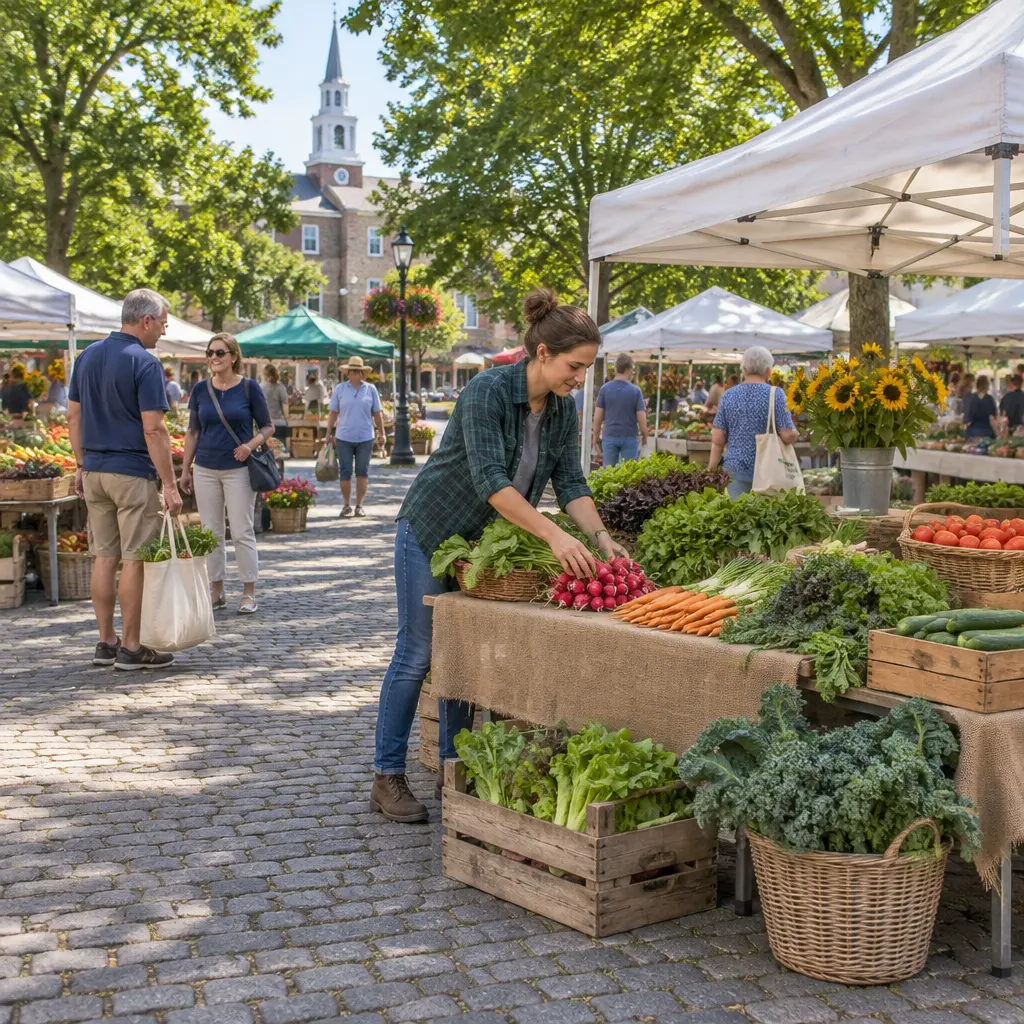
Supporting local producers means buying goods and services from farms, food makers, artisans, and other businesses rooted in a community. When rural residents, institutions, and visitors spend money with these businesses, more of that spending can circulate locally, supporting jobs, supplier relationships, and community services. The U.S. Department of Agriculture’s 2022 Census of Agriculture counted about 1.9 million farms, while its local-food sales data show that direct marketing is one route for farms to reach customers. The economic benefits are strongest when local purchasing is connected to reliable markets, fair business conditions, and investment in infrastructure—not treated as a substitute for broader rural development.
Local Producer Support Strengthens Rural Economic Resilience
A local producer is a farm, food processor, craft business, or other enterprise that makes or grows products within or near the community where they are sold. Supporting these producers can strengthen rural economies by retaining a greater share of consumer spending, diversifying employment, widening market access, and reinforcing relationships among businesses. The result depends on local capacity: producers need customers, distribution, workers, financing, and dependable routes to market.
The USDA’s 2022 Census of Agriculture reported approximately 1.9 million U.S. farms and $543 billion in agricultural products sold. USDA’s 2020 Local Food Marketing Practices Survey, the most recent dedicated national survey available for this measure, found that farms sold about $9 billion in food through local food marketing channels in 2020. Those figures show both the scale of agriculture and the opportunity to connect more production with nearby consumers. They do not mean every local purchase creates the same economic return; outcomes vary with ownership, sourcing, labor practices, and how much of the supply chain is local.
Local Producer Purchasing Retains Spending and Builds Rural Business Networks
Local purchasing is the practice of buying goods from businesses based in a defined region. In rural economies, it can create a shorter link between producer and customer, but “local” has no single national boundary or universal distance. USDA describes local and regional food systems as networks that connect producers and consumers through geographically proximate production, processing, distribution, and sales.
This purchasing relationship has several forms: direct farm sales, farmers markets, food hubs, community-supported agriculture, cooperative businesses, and institutional procurement. Each can give producers a different route to customers. The economic connection is clearest when local firms also source inputs, hire locally, and use local services, allowing income to circulate across multiple businesses.
Direct Sales and Shorter Supply Chains
Direct sales occur when producers sell to consumers without a conventional wholesale intermediary. Farm stands, farmers markets, online farm shops, and community-supported agriculture subscriptions are examples. These channels may let producers capture more of the retail price and hear customer feedback directly, although they also require time for marketing, packaging, transport, and sales.
USDA’s 2020 Local Food Marketing Practices Survey recorded $9 billion in local food sales by farms, including direct-to-consumer sales and sales to retailers, institutions, and intermediaries. The figure is a national snapshot, not a guarantee that direct marketing is profitable for every farm. Perishable products, small customer bases, and limited processing or cold storage can constrain growth.
Food Hubs and Cooperative Infrastructure
A food hub aggregates, stores, processes, or distributes products from multiple producers, helping smaller farms meet the volume and consistency requirements of larger buyers. Cooperatives similarly allow members to share purchasing, processing, marketing, or distribution resources. These models can address a common rural challenge: an individual producer may have a high-quality product but lack the equipment or scale to reach distant or institutional markets.
USDA’s Agricultural Marketing Service identifies aggregation, distribution, and marketing as core functions of food hubs. Their value is practical as well as economic: shared infrastructure can reduce duplicated costs and make local products easier for schools, hospitals, grocers, and restaurants to buy. Whether a hub succeeds depends on dependable supply, skilled management, buyer demand, and sufficient working capital.
Shorter supply chains and shared infrastructure help producers find customers, and those markets can have broader effects on jobs and business formation. The next link is whether a community can turn producer activity into durable employment and a more varied local economy.
Local Producer Businesses Support Rural Employment and Economic Diversification
Economic diversification means developing a wider mix of industries, employers, and income sources rather than relying heavily on one sector. Local farms and producer businesses can contribute through production, processing, transportation, retail, repair, hospitality, and professional services. A thriving local food economy, for example, can create demand for packaging suppliers, mechanics, logistics providers, and food-service workers.
The USDA Economic Research Service’s Rural America at a Glance reports that rural economies differ considerably by region and industry. Agriculture remains important to many places, but it is not the only source of rural employment or income. Supporting local producers is therefore best understood as one element of a broader economic portfolio, alongside manufacturing, healthcare, tourism, education, and other services.
Jobs Across Production and Processing
Producer-led economic activity can support jobs on farms and in businesses that transform raw materials into marketable goods. Food processing, milling, dairy production, meat processing, fiber manufacturing, and packaging add value before a product leaves the region. Local processing can also reduce the need to ship raw goods elsewhere for transformation, though it requires investment in facilities, food-safety systems, trained workers, and market access.
The Bureau of Economic Analysis’ regional accounts track agriculture and related industries as part of local economic output, while the Bureau of Labor Statistics provides employment data by industry and location. These sources help communities assess which parts of a producer economy are growing and where workforce gaps exist. A jobs assessment should distinguish seasonal from year-round work and examine wages, safety, and job quality—not just the number of positions.
Small Business Formation and Local Multipliers
A local economic multiplier describes how an initial purchase can generate additional economic activity when workers and businesses spend income within the region. A local producer might pay a nearby repair shop, hire a regional accountant, and sell to a local grocer; those businesses may then purchase other local services. The extent of this effect varies and should not be assumed from a simple claim that local spending always produces a fixed return.
The U.S. Small Business Administration’s Office of Advocacy reports that small businesses account for a substantial share of U.S. businesses and employment. In rural places, producer enterprises can contribute to this small-business base, particularly when they can access loans, technical assistance, broadband, and suitable commercial space. Local support is more likely to foster lasting business growth when paired with practical help in bookkeeping, compliance, product development, and succession planning.
Jobs and business formation can make a local economy more varied, but rural vitality also depends on whether residents can access nutritious food and whether community institutions can purchase regional products. Connecting producers to those buyers turns economic development into a visible community benefit.
Local Producer Partnerships Improve Market Access and Community Well-Being
Market access is the ability of a producer to reach customers under commercially workable conditions. It includes transportation, storage, processing, marketing, digital connectivity, and the ability to meet buyer requirements. Rural producers may face long distances to markets and limited access to aggregation or cold-chain facilities, making partnerships with retailers and public institutions especially important.
USDA’s Farm to School Census documents efforts by school districts to purchase and serve locally or regionally produced foods and to provide food, agriculture, and nutrition education. Institutional buying can provide a steady customer, but schools and other public buyers also need predictable deliveries, competitive pricing, food-safety compliance, and procurement procedures that smaller businesses can navigate.
Schools, Hospitals, and Public Procurement
Institutional procurement means purchasing by organizations such as schools, hospitals, universities, and government agencies. When these buyers develop workable contracts with local producers, they can provide more consistent demand than one-off retail sales. Strategies include dividing large contracts into manageable lots, forecasting menus early, coordinating deliveries, and using food hubs to aggregate supply.
The USDA Farm to School Census provides data on school food purchasing and related activities, illustrating that local sourcing can be embedded in public meal programs. These arrangements work best when institutions and producers plan together rather than expecting small farms to meet large orders without notice. Procurement rules and public funding requirements still apply, so programs should be designed to meet both local goals and legal standards.
Food Access and Community Connections
Food access refers to the practical ability to obtain affordable, appropriate, and nutritious food. Farmers markets, mobile markets, farm-to-school programs, and community-supported agriculture can connect residents with regional food, but local supply alone does not ensure affordability or year-round availability. Transportation, income, disability access, food preferences, and storage all influence whether residents can benefit.
USDA’s Economic Research Service tracks food access through measures such as distance to supermarkets and household income. Communities can pair local purchasing with nutrition incentives, benefit-program acceptance, mobile distribution, and partnerships with food banks. This approach supports producers while recognizing that food security requires affordability and dependable access, not simply proximity to farms.
Stronger buyer relationships can improve community access, but they also expose the limits of local sourcing: production is seasonal, infrastructure is costly, and markets can be small. Understanding these constraints is essential to building support that lasts beyond a short-term campaign or grant.
Local Producer Support Requires Infrastructure, Fairness, and Resilience
Resilience is the capacity of a business or community to prepare for, withstand, and recover from disruptions. A diverse network of producers and buyers may reduce dependence on a single supplier or employer, but local systems are not automatically more resilient. They can face the same risks as larger supply chains, including drought, floods, disease, labor shortages, fuel costs, and market concentration.
The USDA’s 2022 Census of Agriculture records farm structure and production, while USDA risk-management and conservation programs address some of the financial and environmental risks producers face. Support initiatives should consider the whole business environment: reliable roads, broadband, water systems, financing, workforce development, insurance, and access to technical expertise.
Infrastructure and Digital Market Access
Rural infrastructure includes transportation, electricity, broadband, processing facilities, cold storage, and distribution networks. These assets determine whether a producer can safely store goods, communicate with customers, fulfill orders, and reach markets on time. Online sales can extend a business’s reach, but reliable internet, digital skills, payment systems, and shipping options are necessary for the channel to work.
The Federal Communications Commission’s broadband data and USDA rural development programs document persistent infrastructure needs and funding efforts. Community planning can prioritize shared assets—such as refrigerated storage, commercial kitchens, or aggregation space—that multiple producers can use. Such investments should be based on documented demand and a sustainable operating plan.
Fair Returns and Inclusive Participation
Inclusive producer support means ensuring that access to land, capital, markets, training, and public programs is not limited to a narrow group. This includes attention to beginning farmers, small-scale operators, tribal producers, and historically underserved communities. Fair purchasing also means paying prices that reflect production costs and avoiding contract terms that transfer excessive risk to producers.
USDA’s Census of Agriculture reports farm counts and sales by characteristics of producers, offering a basis for understanding who participates in agriculture. Communities can use disaggregated data and producer consultation to identify barriers, then tailor technical assistance, financing, procurement, and land-access programs accordingly. Broad participation strengthens the local business base and makes public investment more accountable.
Measuring Outcomes and Avoiding Overclaiming
Evaluation measures whether support is producing intended economic and community outcomes. Useful indicators include producer revenue, local procurement totals, jobs and wages, business survival, processing capacity, and the share of spending retained within the region. Communities should also track affordability, environmental performance, and participation among different kinds of producers.
A chart comparing local food sales over time, institutional procurement, and producer employment could help show trends, provided the measures use consistent definitions and years. USDA’s local-food survey and agricultural census offer valuable benchmarks, but their coverage and definitions differ. Reporting the source, period, and limitations of each metric prevents local purchasing claims from being mistaken for proof of a guaranteed multiplier or universal benefit.
Conclusion: Supporting Local Producers Creates Stronger Rural Economies
Local producer support can retain spending, strengthen small businesses, create opportunities in processing and distribution, and connect rural communities with dependable food and other locally made goods. Direct sales, food hubs, cooperatives, and institutional purchasing are distinct approaches, while infrastructure, fair returns, and inclusive access help determine whether they endure. National evidence—including USDA’s estimate of $9 billion in farm local-food sales in 2020—shows that these markets are substantial, though their effects vary by place and business model.
Residents can begin by buying from nearby producers, asking schools and public institutions about regional procurement, and supporting shared infrastructure and producer-friendly policies. Local leaders can set clear targets and publish results on jobs, sales, affordability, and participation. For further research, consult USDA’s Census of Agriculture, Local Food Marketing Practices Survey, Farm to School Census, and rural development resources before designing programs for a particular community.
Sources: U.S. Department of Agriculture, 2022 Census of Agriculture, https://www.nass.usda.gov/Publications/AgCensus/2022/; U.S. Department of Agriculture, 2020 Local Food Marketing Practices Survey, https://www.nass.usda.gov/Publications/AgCensus/2022/Online_Resources/Local_Food/; U.S. Department of Agriculture, Local and Regional Food Systems, https://www.ers.usda.gov/topics/food-markets-prices/local-foods/; U.S. Department of Agriculture, Agricultural Marketing Service, Regional Food Economies, https://www.ams.usda.gov/services/local-regional/food-hubs; U.S. Department of Agriculture, Rural America at a Glance, https://www.ers.usda.gov/publications/pub-details/?pubid=107535; U.S. Bureau of Economic Analysis, Regional Economic Accounts, https://www.bea.gov/data/economic-accounts/regional; U.S. Bureau of Labor Statistics, Quarterly Census of Employment and Wages, https://www.bls.gov/cew/; U.S. Small Business Administration, Office of Advocacy, Frequently Asked Questions About Small Business, https://advocacy.sba.gov/2023/03/07/frequently-asked-questions-about-small-business-2023/; U.S. Department of Agriculture, Farm to School Census, https://www.fns.usda.gov/cfs/farm-school-census; U.S. Department of Agriculture, Economic Research Service, Food Access Research Atlas, https://www.ers.usda.gov/data-products/food-access-research-atlas/; Federal Communications Commission, National Broadband Map, https://broadbandmap.fcc.gov/.