
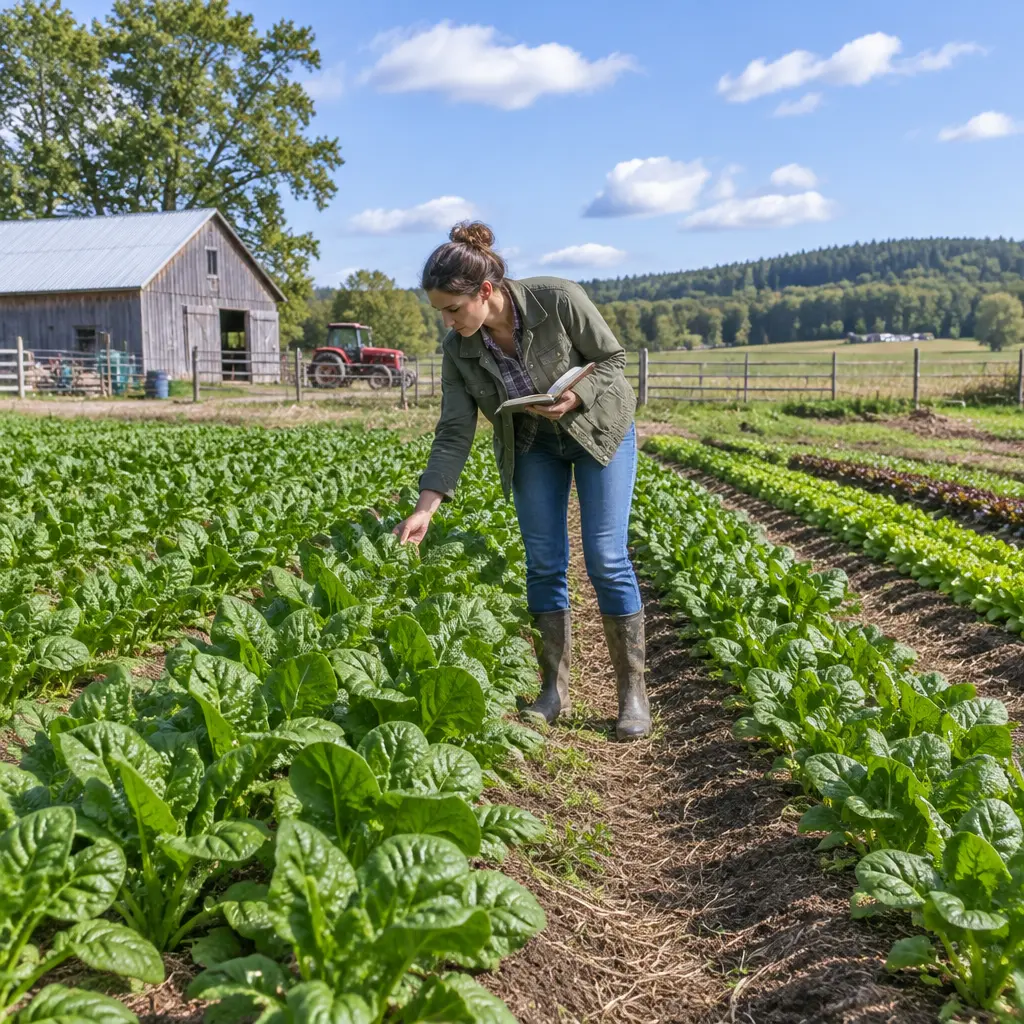
Certified organic and naturally grown both describe farming practices that limit certain synthetic inputs, but they are not interchangeable labels. In the United States, “organic” is a regulated federal certification under the USDA National Organic Program (NOP), with defined production, handling, recordkeeping, and inspection requirements. “Naturally grown” has no single nationwide legal definition for food; the phrase may be used descriptively or under a private program, such as Certified Naturally Grown (CNG). That distinction matters: USDA reported more than 28,000 certified organic operations in the United States in 2023, while a CNG label signals compliance with that program’s standards—not USDA organic certification. This article explains what each label means, how standards and verification differ, what shoppers can infer, and how to check claims.
Certified organic: the meaning and scope of the label
Certified organic is a legally defined production and handling claim overseen by the USDA Agricultural Marketing Service through the National Organic Program. The USDA describes organic agriculture as an integrated system that supports ecological balance and conserves biodiversity. To sell most agricultural products as “organic” in the United States, producers and handlers must follow the applicable NOP rules and be certified by a USDA-accredited certifier, unless a specific exemption applies.
The rules cover more than whether a farm sprays pesticides. They address land history, soil fertility, crop rotations, pest and weed management, livestock feed and care, prohibited substances, processing, segregation, and records. Organic does not mean “pesticide-free”: the regulations allow certain substances, including some naturally derived and some synthetic materials, when they appear on the National List and are used under the applicable restrictions.
USDA’s 2023 Organic Survey counted 28,421 certified organic farms and ranches, with $11.2 billion in organic product sales. Those figures illustrate the scale of the regulated sector; they do not mean every product described as natural is certified organic.
Crop production and land requirements
Organic crop certification requires producers to manage soil fertility and crop nutrients primarily through practices such as rotations, cover crops, and permitted amendments. Land generally must have had no prohibited substances applied during the three years immediately before harvest of an organic crop. Producers also must use preventive approaches to weeds, pests, and disease, turning to permitted inputs only when those approaches are insufficient.
Livestock and processed products
Organic livestock rules include organic feed, access to the outdoors, and requirements for living conditions and health care. For processed foods, the label category depends on the product’s ingredients and production. Under USDA labeling rules, “100 percent organic” products contain only organic ingredients, excluding permitted processing aids and water or salt where applicable; “organic” products generally must contain at least 95% organic ingredients; and “made with organic” products must contain at least 70%. The word “natural” on a processed food label does not itself establish organic production.
Certification, inspections, and exemptions
Certified operations submit an organic system plan describing how they will meet the rules and keep records that allow products to be traced. A USDA-accredited certifier reviews the operation and conducts an on-site inspection at least annually. Some small operations may qualify for an exemption from certification—generally, producers with no more than $5,000 in annual organic sales—but they still must follow applicable organic production and handling standards and cannot use the USDA Organic seal.
Naturally grown: a less standardized claim
“Naturally grown” is not a single federal agricultural certification equivalent to USDA organic. The USDA National Organic Program does not define “natural” as a substitute for organic certification. In the marketplace, the phrase can refer to a producer’s own description, a retailer’s claim, or a private standard. Consumers therefore need to identify who defines the claim and what evidence supports it.
The main agricultural example is Certified Naturally Grown, a nonprofit certification program designed for small-scale farms and producers. CNG says its standards are based on organic practices and prohibit synthetic fertilizers, pesticides, herbicides, and genetically modified organisms in certified production, with additional requirements that vary by program category. Its label is a private certification, not a USDA certification. The name may sound similar to organic, but the rules, oversight structure, and legal status are distinct.
Certified Naturally Grown verification
CNG uses a peer-review approach that includes farm inspections by other participating farmers, along with records and program oversight. This model can make verification more accessible to smaller farms, but it is not the same certification system as USDA-accredited organic inspection. A shopper who sees the CNG mark can check the program’s current standards and producer directory to understand what was reviewed.
Uncertified “natural” claims
A farm or food seller may use “naturally grown” without participating in CNG or another defined program. In that case, the phrase alone does not tell consumers which inputs were used, whether livestock met a specific standard, whether the farm was inspected, or whether records were independently verified. The Federal Trade Commission’s truth-in-advertising principles require marketing claims to be truthful and not misleading, but they do not turn the everyday phrase “naturally grown” into a uniform production standard.
How the standards and verification compare
The clearest comparison is not “organic versus natural” as a simple ranking, but a comparison of defined rules, oversight, and the specific product claim. USDA organic has a federal regulatory framework; Certified Naturally Grown has a private program framework; and an unsupported natural claim may have no disclosed farm-specific standard.
- Definition: USDA organic has federally codified production and handling rules. “Naturally grown” has no single nationwide agricultural definition.
- Verification: Organic certification uses USDA-accredited certifiers and annual inspections. CNG uses its own program requirements, including peer review; an informal natural claim may not involve outside verification.
- Inputs and practices: Both organic and CNG standards restrict specified synthetic inputs, but their detailed rules and permitted materials are not identical. “Natural” alone does not specify an input list.
- Label use: The USDA Organic seal is reserved for qualifying products under NOP rules. A CNG mark identifies participation in that private program. The word “natural” by itself is not proof of either certification.
- Scope: USDA organic rules cover crops, livestock, and handling. Private natural-growing programs may focus on particular producer or product categories.
These differences affect what a label can substantiate. For example, “organic” on a qualifying packaged product connects to ingredient thresholds and handling rules, while “naturally grown” needs additional context—such as the name of a certification program—to communicate a verifiable standard.
What consumers can infer—and what they cannot
A credible label helps identify production practices, but it should not be treated as a blanket guarantee about nutrition, food safety, environmental impact, or farm size. Organic certification indicates compliance with specified production and handling rules; it does not mean a food has no pesticide residues, is automatically more nutritious, or comes from a small local farm. Likewise, a naturally grown claim does not, without a named standard, establish exactly how a product was grown.
For shoppers, the practical test is to ask three questions: Who sets the standard? Who checks compliance? Can the producer or product be verified? The USDA Organic Integrity Database can help verify certified operations, while CNG maintains information about participating producers and its standards. For a seller using “naturally grown” without a program mark, ask what practices the claim means and whether inspection or documentation is available.
A quick label-checking guide
- Look for the exact wording: “USDA Organic,” “Certified Naturally Grown,” or simply “natural” are different claims.
- Check the certifier or program name, and confirm that the producer or product appears in its directory where one is available.
- For packaged food, distinguish the regulated organic categories—such as “organic” and “made with organic”—from broad marketing language.
- Ask the farm about its practices, inspection process, and recordkeeping if the claim is not tied to a recognizable standard.
Conclusion: choose the label that matches the evidence
Certified organic is a federally regulated claim with defined standards, accredited certification, and routine inspection. Naturally grown is a broader phrase: it may refer to the private Certified Naturally Grown program, but without a named standard it does not provide a consistent, independently verifiable description. The scale of USDA-certified agriculture—28,421 farms and ranches and $11.2 billion in sales in 2023—shows why clear distinctions matter in a growing market.
When comparing products, read the exact claim, identify who verifies it, and consult the relevant certification directory or ask the producer for details. For deeper research, review USDA National Organic Program labeling guidance and the current standards of any private certification program you are considering.
Sources: U.S. Department of Agriculture, Agricultural Marketing Service, National Organic Program, https://www.ams.usda.gov/about-ams/programs-offices/national-organic-program; Electronic Code of Federal Regulations, 7 CFR Part 205—National Organic Program, https://www.ecfr.gov/current/title-7/subtitle-B/chapter-I/subchapter-M/part-205; U.S. Department of Agriculture, National Agricultural Statistics Service, 2023 Organic Survey, https://www.nass.usda.gov/Publications/AgCensus/2022/Online_Resources/Organics/; Certified Naturally Grown, Standards, https://www.cngfarming.org/standards; Certified Naturally Grown, About Certified Naturally Grown, https://www.cngfarming.org/about; Federal Trade Commission, Advertising and Marketing Basics, https://www.ftc.gov/business-guidance/advertising-marketing